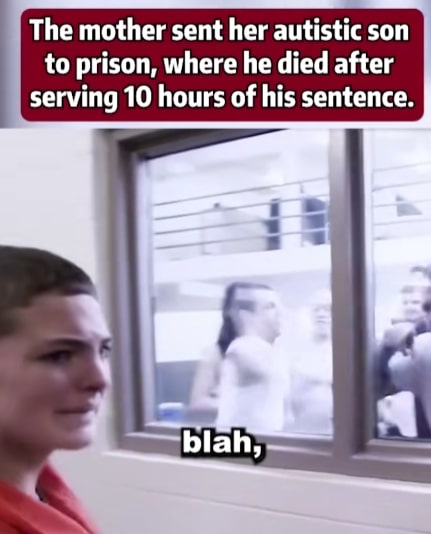
A deeply sorrowful story has captured national attention after a young man with autism died only ten hours after beginning his jail sentence—a sentence reportedly supported by his own mother in hopes of correcting his behavior. What was meant as a disciplinary measure ended in heartbreak, leaving a family and community shattered.
The 20-year-old, whose identity is being protected for privacy, had been struggling with behavior issues related to his diagnosis. According to reports, his mother, hoping to help him face consequences for repeated minor infractions, agreed with officials that a brief incarceration might set him on the right track. But within hours of being booked, the young man was found unresponsive in his cell.
Authorities have revealed that he was placed in a general population unit despite clear documentation of his autism and special needs. An internal probe found that he was quickly subjected to bullying and physical attacks from other inmates. Staff reportedly failed to act swiftly enough to stop the assault that ultimately caused his death.
The grieving mother, who initially believed incarceration would serve as a corrective path for her son, has publicly expressed profound regret and anger toward the prison system. “I trusted them to protect him,” she said tearfully. “He wasn’t dangerous—he was just different. And now he’s gone because no one cared enough to keep him safe.”
Disability rights advocates have condemned the correctional system’s failure to accommodate individuals with autism and other neurodivergent conditions. “This case shows a catastrophic lack of understanding,” said one specialist. “Prisons are not equipped to care for people who require compassion, structure, and support—not punishment.”
The story has sparked widespread emotion on social media, with thousands sharing sympathy and outrage. Many are demanding changes to ensure that people with disabilities are never placed in unsafe conditions without proper evaluation and supervision. Hashtags like #JusticeForHim and #ProtectTheVulnerable have trended as part of a growing movement calling for accountability.
Legal proceedings are now underway, with the family’s attorney preparing to sue the correctional facility for negligence and wrongful death. Local lawmakers have also pledged to review jail intake policies and consider new measures for handling inmates with special needs.
Mental health experts highlight that this tragedy reflects a larger problem: the lack of adequate resources for families supporting loved ones with autism and behavioral challenges. “Parents often feel they have no choice but to involve law enforcement out of desperation,” said a psychologist. “But the criminal justice system is not a replacement for mental health care.”
The young man’s death is a heartbreaking reminder of the fragile trust between families and the institutions meant to protect them. His story has become a powerful call for reform—an urgent demand to treat every life, especially the most vulnerable, with dignity, care, and understanding.