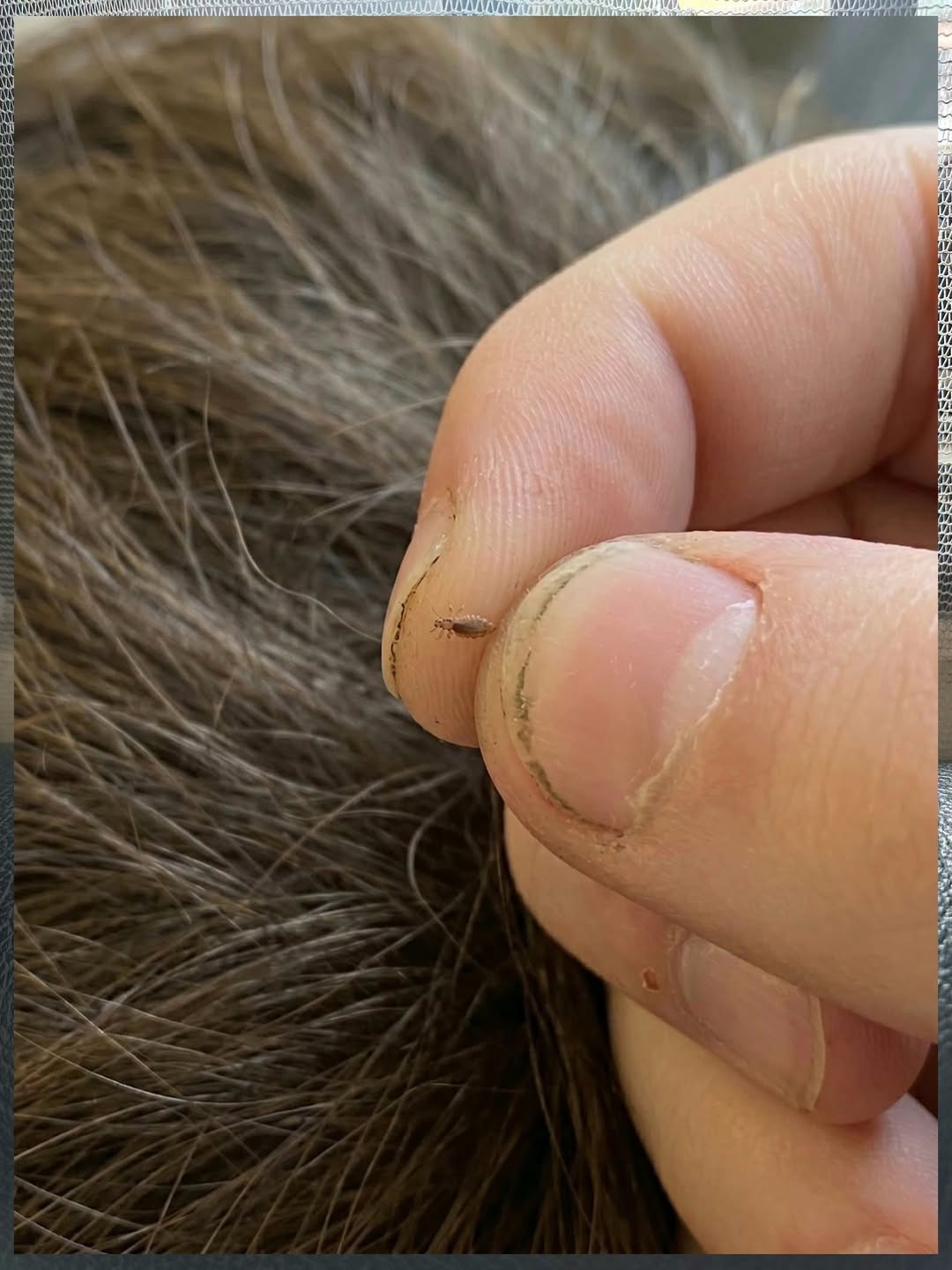
The discovery often happens in the most ordinary moment.
A quick brush through someone’s hair.
A casual glance while sitting together.
A small movement near the scalp that makes you look twice.
Then suddenly, there it is.
A tiny insect.
A tiny problem.
A huge wave of emotion.
For many people, finding a louse in their partner’s hair feels like an immediate crisis. Questions start racing through their minds. How did this happen? Where did it come from? Does it mean something is wrong? Did someone do something careless?
But the truth is much simpler than the fear surrounding it.
A head louse is not a reflection of someone’s hygiene, personality, lifestyle, or worth. It is not proof that someone is dirty, irresponsible, or neglectful. It is simply a common biological issue caused by close contact, something that can happen to almost anyone.
Lice do not choose people based on appearance, income, habits, or how carefully they clean their home.
They choose opportunity.
They look for warmth, hair, and a place where they can survive.
That is all.
Yet the emotional reaction people have toward lice is often far stronger than the actual problem itself. The insect may be tiny, but the shame surrounding it can feel enormous.
For couples, that reaction can become even more complicated.
When one partner discovers lice, both people may suddenly feel uncomfortable. There can be embarrassment, frustration, or even unnecessary suspicion. Some people wrongly connect lice with poor hygiene or question how it happened, turning a simple health issue into a personal conflict.
But lice are not a judgment.
They are not a statement about a person’s character.
They are simply one of those strange reminders that human bodies exist in a world full of constant interaction.
We share spaces.
We hug.
We sit close.
We borrow things.
We live connected lives.
And sometimes, that connection allows tiny unwanted guests to move from one person to another.
The most important thing to remember is that panic does not solve the problem.
Action does.
The moment you replace embarrassment with a practical plan, the situation becomes much easier to manage.
The first step is simply confirming what you are dealing with.
Careful inspection matters. Look closely at the scalp and hair, especially around areas where lice commonly hide. The insects themselves may be difficult to spot because of their small size and movement, but their eggs, known as nits, can often be found attached firmly to strands of hair.
Once you know what you are dealing with, you can move forward calmly.
Special combs designed for removing lice can help eliminate them from the hair. Many treatments are available, and following instructions carefully is important because proper use makes a major difference.
The goal is not perfection.
The goal is consistency.
Treat the problem, check again, and continue until the issue is fully resolved.
There is also an important conversation that many people avoid.
Communication.
Keeping lice secret may feel tempting because of embarrassment, but silence often creates more stress. If you have close contact with someone, especially a partner or family member, honesty helps protect everyone involved.
A simple conversation can prevent unnecessary worry.
It can also transform the situation from something shameful into something manageable.
Instead of thinking, “How could this happen?” the better question is:
“What can we do about it now?”
That small change in perspective can make a huge difference.
Throughout history, people have dealt with all kinds of unexpected challenges involving the body. Lice are not new. They have existed alongside humans for thousands of years. They have affected people in every kind of community and every part of society.
The mistake is believing that a common problem somehow makes someone less worthy.
It does not.
A person with lice is still the same person.
A loving partner is still loving.
A clean home can still have lice.
A careful family can still encounter them.
Life is full of things we cannot completely control.
What we can control is how we respond.
Do we react with blame or kindness?
Do we create shame or support?
Do we make someone feel embarrassed, or do we remind them they are not facing the problem alone?
Those choices reveal far more about a relationship than the presence of a tiny insect ever could.
For couples, moments like this can even become unexpected tests of care. True closeness is not only about sharing happy memories and perfect moments. It is also about how two people handle uncomfortable situations together.
A supportive partner does not make someone feel rejected over something temporary.
They help.
They stay calm.
They remind the other person that a small problem does not change the relationship.
In many cases, what feels like a major disaster in the moment eventually becomes nothing more than a funny story.
A strange memory.
A reminder of a time when two people faced an annoying situation and handled it together.
Because the truth is, almost everyone experiences unexpected problems at some point. Sometimes it is a health issue. Sometimes it is a household problem. Sometimes it is simply one of those awkward situations nobody wants to talk about.
But problems become easier when they are met with honesty and compassion.
The tiny creature in someone’s hair may create a moment of panic, but it does not define them.
It does not erase their kindness.
It does not change their value.
It does not determine whether they deserve love.
The real challenge is not removing the louse.
The real challenge is refusing to let fear and embarrassment become bigger than the problem itself.
So if you ever find yourself facing this tiny unwanted visitor, remember:
Stay calm.
Learn what is happening.
Take practical steps.
Support the person beside you.
Because in the end, the strongest relationships are not built on avoiding every uncomfortable moment.
They are built on knowing that when those moments arrive, you will face them together.