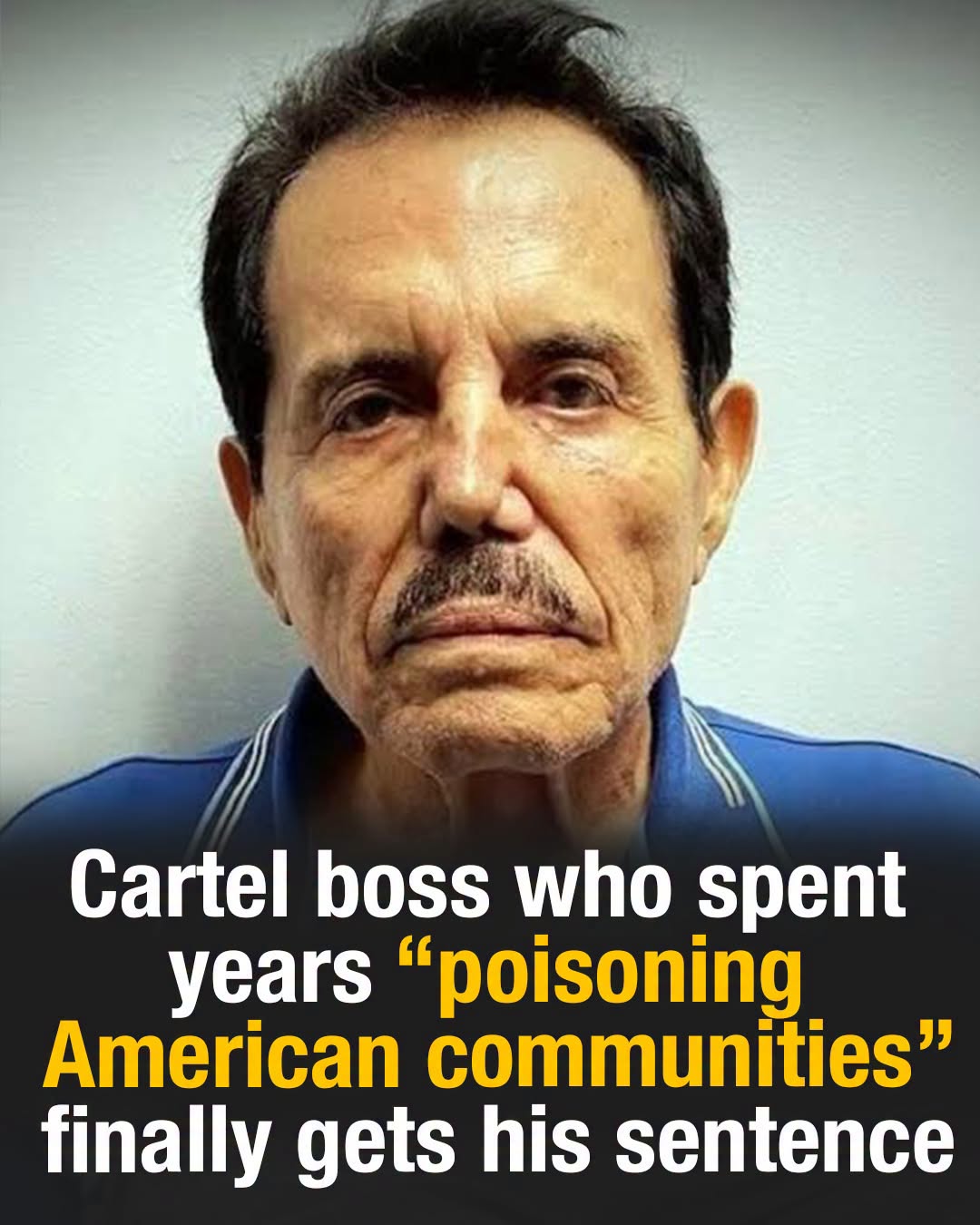
For decades, Ismael “El Mayo” Zambada existed as one of the most elusive figures in organized crime. While many of the world’s most notorious drug traffickers were captured, killed, or extradited, he remained a mystery. Authorities searched for him across mountains, deserts, and cities, yet he managed to avoid arrest for nearly forty years while helping build one of the most powerful criminal organizations in history.
Unlike many cartel leaders who embraced publicity and violence for attention, Zambada preferred to remain in the shadows.
He rarely appeared in photographs.
He almost never granted interviews.
He avoided lavish displays of wealth that attracted unwanted attention.
Instead, investigators say he relied on patience, loyalty, and careful planning to maintain control over vast trafficking operations stretching across Mexico, the United States, and numerous other countries.
While Joaquín “El Chapo” Guzmán became the public face of the Sinaloa Cartel, many law enforcement officials believed Zambada was quietly managing much of the organization’s day-to-day operations behind the scenes.
According to prosecutors, he helped oversee a criminal network responsible for moving enormous quantities of cocaine, methamphetamine, heroin, and eventually fentanyl into communities across North America.
Authorities argue that the consequences of those operations reached far beyond drug trafficking itself.
Entire neighborhoods were transformed by addiction.
Families lost loved ones to overdoses.
Communities struggled with rising violence connected to organized crime.
Corruption spread through government institutions as cartel money reached police officers, politicians, and public officials.
For years, investigators described Zambada as one of the world’s most wanted fugitives.
Yet despite enormous international efforts, he remained beyond their reach.
His eventual capture came not through a dramatic raid or lengthy manhunt but through circumstances few had predicted.
According to court documents and investigators, Zambada’s downfall reportedly began with betrayal from inside the criminal organization he had helped build.
Federal authorities allege that he was deceived into boarding an aircraft under false pretenses before being transported against his expectations into United States custody.
Reports suggest that the operation involved Joaquín Guzmán López, one of the sons of El Chapo Guzmán.
If accurate, the development represented an extraordinary reversal inside one of Mexico’s most powerful criminal families.
For decades, loyalty had been considered one of the cartel’s most important values.
Now, prosecutors argued, internal divisions had accomplished what years of investigations could not.
The once-untouchable cartel leader found himself standing inside an American courtroom.
The contrast could hardly have been greater.
A man who had spent decades avoiding cameras now faced public proceedings watched around the world.
For victims’ families, the moment carried enormous emotional weight.
Many had waited years to see someone they believed played a central role in immense suffering finally held accountable.
During sentencing proceedings, prosecutors described Zambada as one of the architects of an international criminal enterprise responsible for unimaginable violence.
According to government attorneys, the organization used intimidation, bribery, kidnappings, torture, and murder to protect its operations and eliminate rivals.
Communities across Mexico experienced years of bloodshed as competing criminal groups fought for territory.
Meanwhile, enormous quantities of narcotics entered the United States, contributing to addiction crises that continue affecting millions of families.
Federal prosecutors argued that although Zambada often avoided direct public involvement in violent acts, his leadership enabled countless crimes committed by those operating under his authority.
The court also heard about the devastating financial impact of cartel operations.
Authorities sought massive financial penalties intended to strip away profits accumulated through decades of criminal activity.
Ultimately, the court imposed a judgment reportedly totaling approximately fifteen billion dollars.
While symbolic given the difficulty of recovering such enormous assets, prosecutors argued the figure reflected the extraordinary scale of the criminal enterprise.
Perhaps the most closely watched aspect of the proceedings centered on sentencing itself.
Because Zambada reportedly agreed to cooperate with investigators following his arrest, federal prosecutors did not pursue the death penalty.
That cooperation, however, did not spare him from spending the remainder of his life behind bars.
Instead, the court imposed a sentence ensuring that the man once considered nearly impossible to capture would never again live outside prison walls.
Observers noted the remarkable transformation.
For decades, Zambada controlled one of the world’s largest trafficking organizations.
Now every movement occurred under constant supervision inside the federal prison system.
His empire had disappeared.
His freedom had ended.
His future consisted of confinement rather than control.
During proceedings, Zambada reportedly acknowledged aspects of his past while reflecting on the environment in which he grew up.
According to courtroom accounts, he described violence as something that had long seemed normal within his surroundings.
Yet he also reportedly admitted that countless innocent people ultimately suffered because of choices made throughout his criminal career.
Those statements drew significant attention.
Some viewed them as genuine expressions of regret.
Others remained deeply skeptical.
For families who lost loved ones to cartel violence or drug overdoses, apologies offered little comfort after decades of devastation.
Still, one portion of his remarks received widespread coverage.
Addressing younger individuals who might consider entering organized crime, Zambada reportedly urged them to choose a different path.
He warned that violence ultimately destroys everyone it touches.
Money, influence, and power, he suggested, eventually disappear, while suffering remains.
Whether those words reflected sincere remorse or simply recognition of irreversible defeat remains open to interpretation.
Either way, they marked a striking conclusion from someone who had spent most of his adult life helping sustain one of history’s most powerful criminal organizations.
Law enforcement officials described the sentencing as an important milestone rather than the conclusion of broader efforts against organized crime.
They cautioned that while one longtime leader had been removed, criminal networks continue evolving.
New figures often emerge to replace those captured or killed.
Cartel structures frequently adapt quickly to changing circumstances.
Even so, prosecutors argued the case demonstrated that no individual remains beyond accountability forever.
Years of patience, international cooperation, intelligence gathering, and investigative work ultimately brought one of the world’s most elusive fugitives before a judge.
For many communities affected by drug trafficking, the sentence carried symbolic significance.
It represented recognition of decades of suffering experienced by victims whose stories rarely received international attention.
Families torn apart by addiction.
Communities devastated by violence.
Public servants threatened for resisting corruption.
Journalists targeted for exposing organized crime.
Their experiences formed the backdrop to a courtroom proceeding focused on one man but connected to countless lives.
The sentencing also highlighted broader questions about the ongoing battle against international drug trafficking.
Despite high-profile arrests, the global narcotics trade continues generating enormous profits.
Demand remains high.
New trafficking routes emerge.
Synthetic drugs create challenges unlike anything previous generations faced.
Experts frequently argue that dismantling criminal organizations requires far more than capturing individual leaders.
It demands international cooperation, stronger institutions, anti-corruption efforts, economic opportunities, and public health responses addressing addiction itself.
Still, few deny the historical significance of seeing Ismael “El Mayo” Zambada finally face justice after spending nearly four decades avoiding capture.
For years he was viewed almost as a legend within criminal circles.
Invisible.
Untouchable.
Always one step ahead.
Now his story ends not with another successful escape but inside a courtroom where his future was decided by the very legal system he had spent decades evading.
For prosecutors, it marked the end of one of the longest-running pursuits in modern law enforcement history.
For victims, it offered at least some measure of accountability after years of unimaginable loss.
And for the man once known as the silent ruler of the Sinaloa Cartel, it marked the final collapse of an empire built on fear, secrecy, and violence—a legacy that ultimately ended not in power, but behind prison walls for the rest of his life.