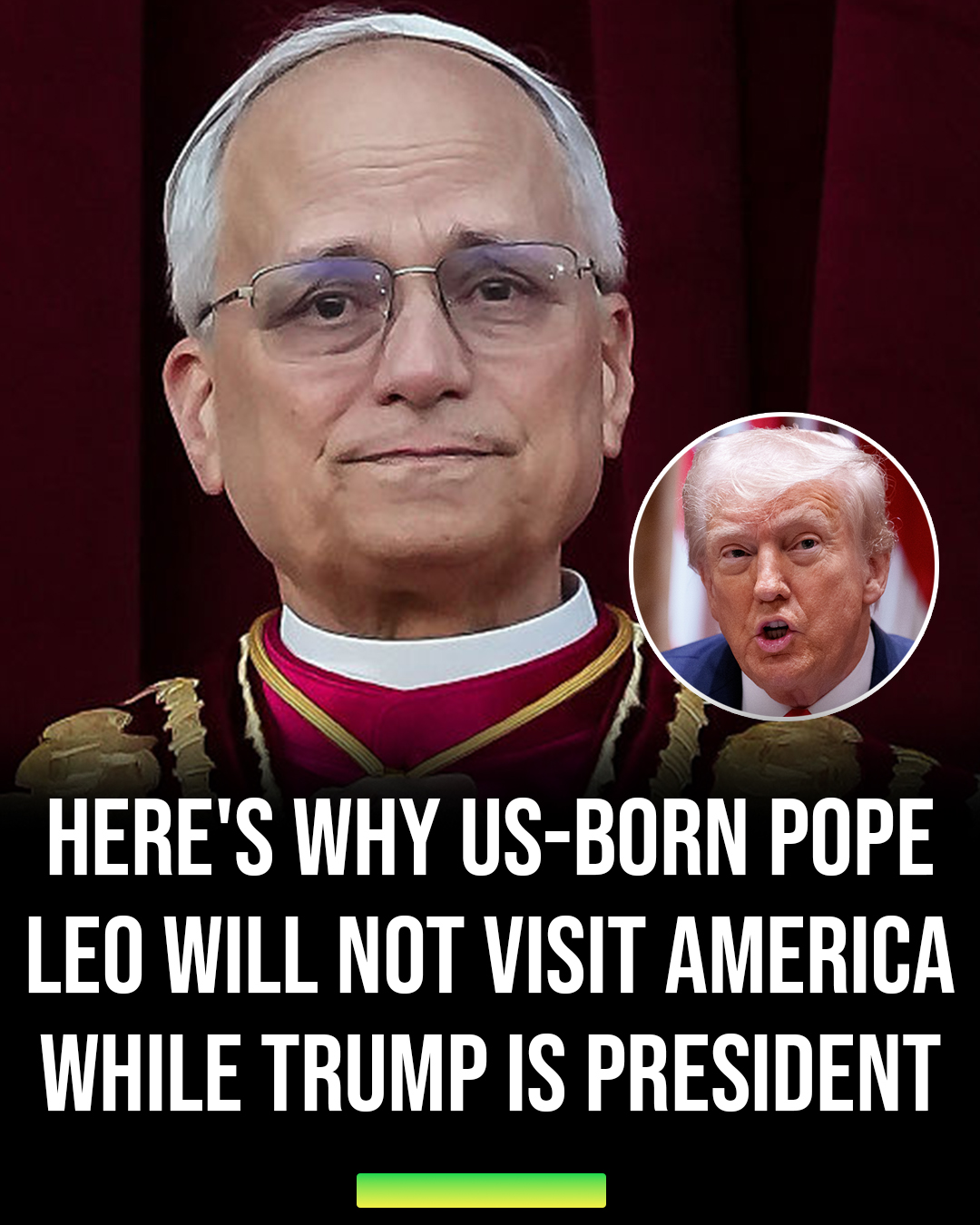
Instead of standing beside Donald Trump at a flag draped celebration of America s 250th anniversary, Pope Leo XIV is expected to stand on the rocky shores of Lampedusa, greeting exhausted migrants stepping off crowded boats.
The contrast is deliberate and unmistakable. One leader marking national power. The other highlighting human vulnerability. For the first American pope, birthplace is not destiny. Conscience is. He was born in the United States. He grew up in its suburbs. He knows the country s strengths and its flaws. But he has made it clear that his loyalty is not to any nation. It is to a higher calling.
The decision not to visit America while Trump holds the presidency has shocked many. Popes typically make it a priority to visit countries with large Catholic populations, and the United States has millions of faithful followers. A papal visit is not just a religious event. It is a cultural moment, a media spectacle, a chance for millions to see their spiritual leader in person. But Pope Leo has chosen to stay away. Not because of logistics or scheduling conflicts. Because of principle.
His years as a missionary in Peru shaped him in ways that his American upbringing never could. He lived among the poor. He saw the desperation of families forced to flee their homes. He held dying children in his arms while their mothers wept. Those experiences did not leave him. They became the lens through which he views the world. When he looks at America, he does not see a shining city on a hill. He sees a nation that has lost its way. A nation that builds walls instead of bridges. A nation that turns its back on the very people Christ called blessed.
His sharp criticism of mass deportations has put him on a collision course with the White House. Trump has made immigration enforcement a cornerstone of his presidency. Family separations. Travel bans. Military style operations at the border. For the pope, these policies are not just political disagreements. They are moral outrages. He has compared the treatment of migrants to the crucifixion. He has called detention centers modern day Golgothas. Those are not the words of a diplomat choosing his language carefully. They are the words of a prophet who refuses to stay silent.
His warnings against a diplomacy based on force have further strained relations. Trump has threatened nations, imposed tariffs, and spoken openly about military action. The pope believes that such talk is not only dangerous but sinful. He has called for dialogue, not threats. For mercy, not retaliation. For understanding, not domination. These are not the positions of a pacifist naive about the world s dangers. They are the positions of a man who has seen war up close and knows what it costs.
A summoned envoy at the Pentagon, a declined July 4 invitation, and a Vatican official quietly suggesting he may never visit the U S under this administration all point in one direction. This is not a scheduling dispute. It is a moral line, drawn in public, and held in silence. The White House has tried to downplay the tension. Spokespeople have insisted that the pope is welcome anytime. But the pope s actions speak louder than their words. He has chosen to visit other countries. He has traveled to conflict zones and disaster areas. He just will not come here.
The symbolism of Lampedusa is important. The Italian island has become a symbol of the migrant crisis. Thousands have arrived on its shores, fleeing war and poverty. Many have died trying to reach safety. The pope s decision to be there on America s birthday sends a clear message. While the United States celebrates its past, he is focused on the present suffering of the world s most vulnerable people. He is not anti American. He is pro compassion. And in his view, the current administration represents the opposite of that.
Critics have accused him of playing politics. They argue that a pope should rise above partisan disputes and engage with leaders regardless of their policies. They point to previous popes who visited the United States during Republican and Democratic administrations alike. But Pope Leo would likely respond that he is not refusing to engage. He is refusing to normalize policies he believes are evil. There is a difference. One is stubbornness. The other is fidelity to his conscience.
Supporters see his stance as courageous. They argue that the pope has a responsibility to speak truth to power, even when that power is in his home country. They note that he has not avoided other difficult conversations. He has confronted dictators and human rights abusers around the world. His decision to stay away from America is not about personal comfort. It is about maintaining moral clarity. If he were to stand beside Trump at a July 4 celebration, they argue, he would be implicitly endorsing policies he has condemned. Silence in the face of injustice is complicity.
The Vatican has been careful not to escalate the conflict. Officials speak of scheduling conflicts and logistical challenges. They emphasize that the pope has not closed the door forever. But those paying close attention know the truth. This pope will not visit America while Trump is president. Not because he cannot. Because he will not. And that decision, whether one agrees with it or not, is a testament to his belief that some lines should never be crossed. Even for a president. Even for a birthday. Even for a nation he once called home.