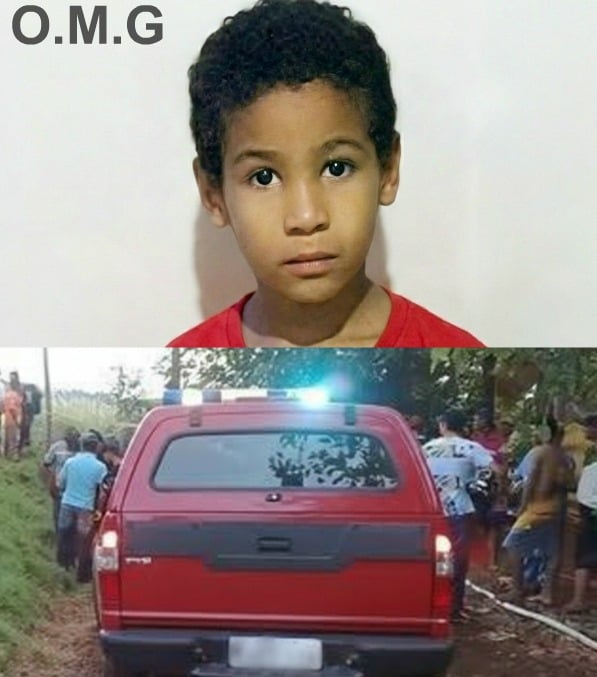
By the time rescuers reached the small figure near the shed, the entire search hinged on a heartbeat. Four days. Ninety six hours of agonizing uncertainty.
Ninety six hours of parents who could not eat or sleep. Ninety six hours of volunteers trudging through woods, neighbors checking barns, and law enforcement refusing to give up hope. Tallyson was dehydrated, shivering, and terrified, but he was alive. That single word, alive, carried more weight than any other in the English language.
The discovery happened almost by accident. A volunteer searching a property that had already been checked twice noticed something unusual near an old storage shed. A flash of color. A small shape curled against the foundation. He called out and heard a weak response. His heart stopped. Then it raced. He radioed for help and knelt beside the boy, speaking softly, promising him that everything would be okay. Tallyson could not stop shaking. His lips were cracked. His eyes were hollow. But he was breathing. He was alive.
As paramedics wrapped him in blankets and rushed him to the hospital, officers radioed the words everyone had been desperate to hear. He s safe. Those two words traveled across frequencies, through dispatch centers, and into the phones of family members who had been waiting by their screens for any news. The response was immediate. Cheers erupted at the command post. Volunteers hugged each other and wept. Strangers who had spent days searching side by side became friends in that moment, bonded by relief.
Moments later, Tallyson s parents ran into the hospital corridor, collapsing into tears as they finally held their son again. His mother could not speak. She simply held him, her body shaking with sobs she had been holding back for four days. His father pressed his forehead against his son s hair and whispered something no one else could hear. The medical staff stepped back, giving the family space. They had seen this before. They knew that nothing they could do would be as healing as this embrace.
Investigators now believe Tallyson simply wandered off, panicked, and hid. He had been playing near the edge of the property when something startled him. A loud noise. A strange animal. A moment of confusion that sent him running in the wrong direction. Instead of heading back toward the house, he went deeper into the woods. When he realized he was lost, fear took over. He found a place to hide and stayed there, too scared to call out, too young to know that searchers were looking for him.
What started as a few wrong steps turned into a four day nightmare. He survived on water from a small creek and whatever berries he could reach. The nights were cold. The days were hot. He cried himself to sleep and woke up disoriented, not knowing which way led home. Several times, searchers passed within a few hundred yards of his hiding spot. But he was curled up so small, pressed against the shed so tightly, that they missed him. Twice. Three times. Until finally, someone looked in exactly the right place.
No foul play is suspected. That is the conclusion investigators have reached after reviewing the evidence and interviewing everyone involved. Tallyson got lost. It is as simple and as terrifying as that. But authorities are not done. They are combing through every detail, determined to understand how he disappeared so quickly and how future searches can be more efficient. They are reviewing timelines, communication protocols, and search patterns. They want to learn from this case so that the next missing child is found faster.
In living rooms and front yards across town, families are quietly tightening gates, checking locks, and watching a little closer. The story of Tallyson s disappearance has shaken this community. Parents who used to let their children play outside without constant supervision are rethinking that decision. Neighbors who never paid attention to the woods behind their homes are clearing brush and installing fences. Fear is a powerful motivator. So is love.
For this community, relief comes with a sobering lesson. Children can vanish in an instant. Not because of strangers or criminals, but simply because they are children. Curious. Easily frightened. Prone to making decisions that adults cannot predict. Tallyson did nothing wrong. His parents did nothing wrong. But a combination of bad luck, bad timing, and a child s natural fear turned an ordinary afternoon into a crisis.
The overwhelming emotion now is gratitude. Gratitude that Tallyson is home. Gratitude that the searchers never gave up. Gratitude that the story did not end the way it so often does. Every parent who watched the news coverage knows that this could have been their child. Every neighbor who joined the search knows that they could have been the one to find him or the one who came up empty. The line between tragedy and relief is thin. This time, it bent in the right direction.
Tallyson is recovering. He is eating again. Sleeping again. Smiling again. The physical wounds will heal quickly. The emotional ones may take longer. But he is young. Children are resilient in ways that adults can only admire. He will not remember every detail of those four days. His parents will. The searchers will. The community will. But that is okay. Some memories are meant to be carried by many people, so that no one has to carry them alone.
The search for little Tallyson has ended. He was found without a clear explanation for how he survived, other than luck, determination, and the kindness of strangers who refused to stop looking. That is not a satisfying answer for those who prefer tidy endings. But it is the truth. And sometimes, the truth is enough. Tallyson is home. That is the only ending that matters.