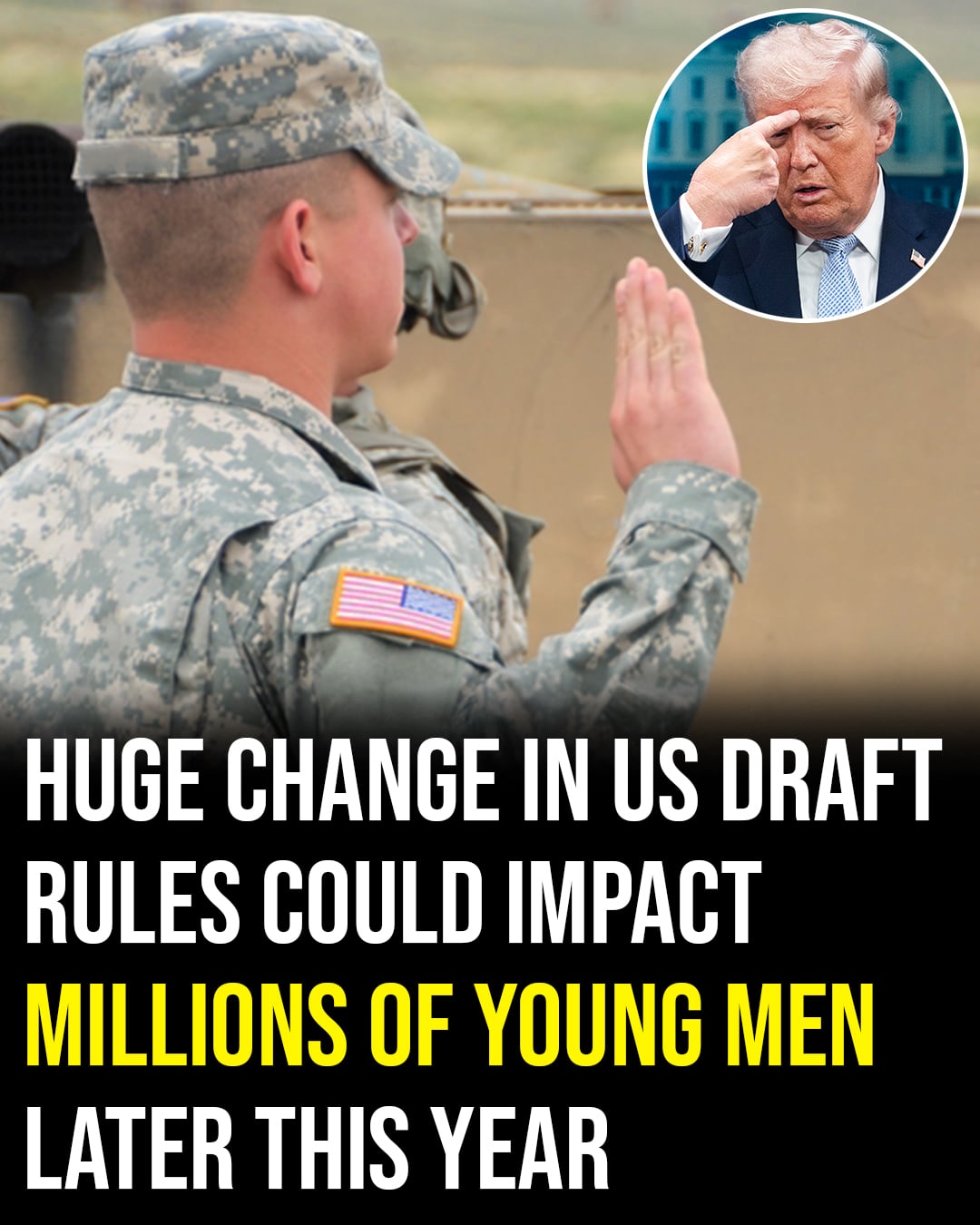
Automatic draft registration marks a turning point in how the United States balances national security, personal responsibility, and individual consent. For decades, the system worked the same way.
Young men turned eighteen, received a notice in the mail or encountered a form at the DMV, and were expected to knowingly register with the Selective Service System. They signed their names. They accepted the legal weight of that choice. Some did it without thinking. Others hesitated. A few refused. But the act of registration remained conscious, deliberate, and personal.
That era is ending. The government is preparing to shift to automatic registration, pulling data from agencies and systems that millions of young men already rely on to drive, study, or work. If you have a driver s license, a state ID, or enrollment at a public university, your information could be transferred directly to the Selective Service without you ever filling out a form. No signature required. No conscious choice. No moment where you decide whether to comply or resist.
The change is significant, but it has largely flown under the radar. Most news cycles are consumed by more dramatic stories. Wars, elections, economic turmoil. Draft registration, by contrast, feels abstract to most people. The draft itself has not been used since the Vietnam War. Young men have grown up in an era of all volunteer military forces. The idea of being conscripted seems like a relic of a distant, darker time. But the system has never been dismantled. It has only been sleeping. And automatic registration is the first step toward waking it up.
Supporters of the change insist this is about efficiency, not escalation. They point to low compliance rates among eligible men. Estimates suggest that millions of young men have failed to register over the years, often simply because they forgot or did not realize it was required. Non registration can carry serious consequences, including ineligibility for federal student aid, government jobs, and even citizenship pathways for immigrants. Automatic registration, advocates argue, would solve that problem. Higher compliance. Lower administrative costs. Better readiness if the unthinkable ever happens.
Opponents see something more troubling. They argue that automatic registration erodes individual consent, turning a deliberate civic duty into a passive data transfer. The government, they warn, should not be in the business of enrolling citizens in military systems without their explicit knowledge or agreement. The shift from opt in to opt out is not minor. It changes the fundamental relationship between the state and the individual. Consent becomes presumption. Choice becomes default.
The symbolism is powerful. At a time of global instability and deep political division at home, the state is tightening its grip on a system built for emergencies. The war in Ukraine, rising tensions with China, and ongoing conflicts in the Middle East have reminded Americans that the world remains dangerous. Military leaders have warned that the all volunteer force is stretched thin, struggling to meet recruitment goals as fewer young people qualify for service due to physical, educational, or moral disqualifications. In that context, automatic registration looks less like bureaucratic housekeeping and more like preparation.
Even if no draft is imminent, automatic registration sends a clear message. If a crisis comes, the government wants every eligible name ready, whether they volunteered or not. That message is not aimed at the current generation alone. It is aimed at the next one, and the one after that. Once automatic registration becomes standard, it will be difficult to reverse. The data pipeline will be built. The systems will be integrated. The assumption of enrollment will become baked into the infrastructure of American life.
Young men who would be affected by this change are largely unaware of the debate. Most do not think about the Selective Service unless they are filling out a financial aid form or applying for a government job. The requirement to register is a background hum, not a front burner issue. But automatic registration would make it even more invisible. Millions would be enrolled without ever knowing it, their names added to a database that exists for one purpose, to facilitate conscription in a national emergency.
The legal landscape around the draft is also shifting. For years, courts have upheld the male only registration requirement, rejecting challenges that argued it discriminated against women. But that could change. Lawmakers have debated expanding registration to include women, and some advocates of automatic registration see it as a step toward gender neutral conscription. If the government is going to enroll men automatically, the logic goes, why not women as well? That question has not been answered, but it looms over the debate.
Civil liberties groups have expressed concern about the privacy implications of automatic registration. Government agencies sharing data without explicit consent is always a sensitive issue. When that data is being used for military purposes, the stakes are even higher. Young men who never intended to register could find themselves on a list they did not know existed, subject to penalties if they fail to update their information or if errors occur in the data transfer. The system assumes competence and accuracy. History suggests that is a risky assumption.
The change also raises philosophical questions about citizenship and obligation. What does it mean to be a citizen in a democracy if the government can enroll you in its defense apparatus without asking? Is registration a duty or a choice? The founders of the Selective Service system envisioned it as a shared responsibility, a way to ensure that the burden of national defense was distributed broadly rather than falling only on those who volunteered. But shared responsibility, in that vision, required conscious participation. Automatic registration flips that logic.
Supporters counter that most young men already register voluntarily, and those who do not are rarely penalized. Automatic registration simply closes a loophole, ensuring that everyone bears the same legal obligation. They argue that the drama around consent is overblown. Registering for the draft does not mean being drafted. It simply means being counted. If a crisis ever required conscription, the government would still need to go through the legal process of calling up individuals. Automatic registration does not bypass that. It just makes the list more complete.
Critics are not convinced. They point out that once automatic registration is in place, the political cost of actually using the draft would fall. The hardest part of conscription has always been the first step, convincing the public that a crisis is severe enough to require forcing people to serve. If the government already has everyone s name, that first step becomes easier. The list is ready. The machinery is in place. Only the order remains.
The debate is likely to intensify as the change moves closer to implementation. Lawmakers will hold hearings. Advocates will testify. Young men will become aware, eventually, that the rules have shifted. By then, however, the shift may already be complete. Automatic registration will be the new normal, as unremarkable as renewing a driver s license or filing taxes. And the quiet enrollment of millions will continue, year after year, until a crisis comes and the country discovers what it has built.