In the days after the fire, the firefighters kept replaying the moment she burst through the door. Barefoot and shaking, she came out of the smoke clutching life in both arms. Her face was blackened with soot.
Her lungs burned from the heat she had inhaled. But her grip on the two small children never wavered. She had not dropped them. She had not hesitated. She had simply run, and that single decision had made all the difference.
The firefighters spoke quietly among themselves about how close it had been. A few more minutes might have meant two tiny white sheets instead of two recovering children. They had seen it before. Too many times. Parents who froze. Parents who assumed someone else would act. Parents who waited for help that arrived seconds too late. This time was different. This time, a young woman had done something extraordinary. She had refused to let fear win.
For all their training, for all their equipment and experience, the firefighters knew that the real hero of that night was not among them. It was the woman sitting in the back of an ambulance, wrapped in a blanket, still coughing up smoke, still trembling from the adrenaline that had carried her through the flames. They had arrived to find the fire already raging. They had done their jobs with skill and courage. But by the time they got there, the children were already outside. She had gotten them out on her own.
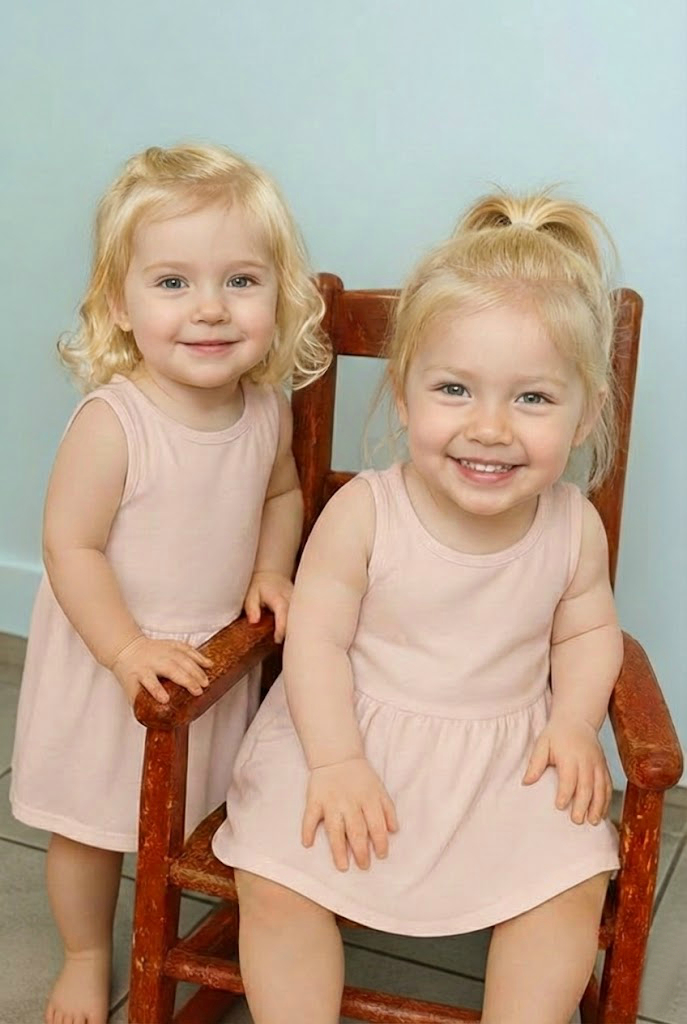
She, however, refused any praise. When reporters asked for her name, she shook her head. When neighbors called her a hero, she looked away. Sitting by their hospital beds in the quiet hours before dawn, she watched their chests rise and fall, still haunted by how quickly joy had turned into horror. One moment, the babies had been laughing, playing, filling the house with the sounds of ordinary happiness. The next, smoke was curling under the door, and the air was thick with the smell of something burning.
She did not remember making the decision to run. She did not remember grabbing the children or pushing through the heat. Her body had acted before her mind could catch up. Later, she would struggle to piece together the sequence of events. The order of steps. The exact path she had taken through the smoke. But in that moment, thinking had been impossible. There was only movement. Only the desperate need to get out, to keep the babies safe, to not let the fire claim what she loved most.
Doctors never found a single clear villain to blame for what had happened. No faulty wiring. No unattended candle. No gas leak that could be pointed to as the cause. There was only a likely mix of unseen triggers that had somehow ignited, feeding on dust and old wood and the dry air of a house that had stood for decades. The mystery of the fire would remain unsolved, a frustrating loose end in a story that otherwise had a happy ending.
What stayed with her was not the mystery. It was the fragile, terrifying truth that sometimes survival hangs on nothing more than a split second choice to move. A moment of hesitation. A second of doubt. A single breath taken to think instead of act. Any of those could have changed everything. But she had not hesitated. She had not doubted. She had not stopped to think. She had simply run, and that had made her a hero.
The babies recovered fully. Their lungs cleared. Their burns healed. Within weeks, they were back to laughing, playing, filling the house with noise and chaos and all the ordinary messiness of childhood. They would never remember the fire. They would never know how close they had come to losing everything. But she would remember. Every time she looked at them, she would see the smoke. Every time they laughed, she would hear the crackle of flames. Every time they slept, she would watch their chests rise and fall, counting the breaths, reassuring herself that they were still here.
The firefighters visited her weeks later. They brought a plaque, a small token of recognition from the department. She tried to refuse it, just as she had refused interviews and photo opportunities. But they insisted. They told her that her story had already spread through their ranks, that the younger firefighters used it as an example of what courage looked like. Not training. Not equipment. Not muscle or technique. Just a woman who loved her children enough to run into a fire and come out holding them.
She kept the plaque on a shelf in the living room, tucked behind a photo of the babies on their first birthday. She did not look at it often. She did not need a reminder of what she had done. The memory was already carved into her, deeper than any metal or wood. But she kept it for them. For the children who would one day ask about the scar on her arm, about the night they did not remember, about the woman who had refused to let them burn.
The fire had taken the house. It had taken her sense of safety, her belief that tragedy happened to other people, her illusion that she could protect her children from everything. But it had not taken them. That was the only victory that mattered. That was the only outcome she had fought for. And as she watched them grow, year after year, she knew that she would do it again. Without thinking. Without hesitation. Without a single second of doubt. She would run into any fire, face any danger, risk anything at all, just to watch their chests rise and fall one more time.