
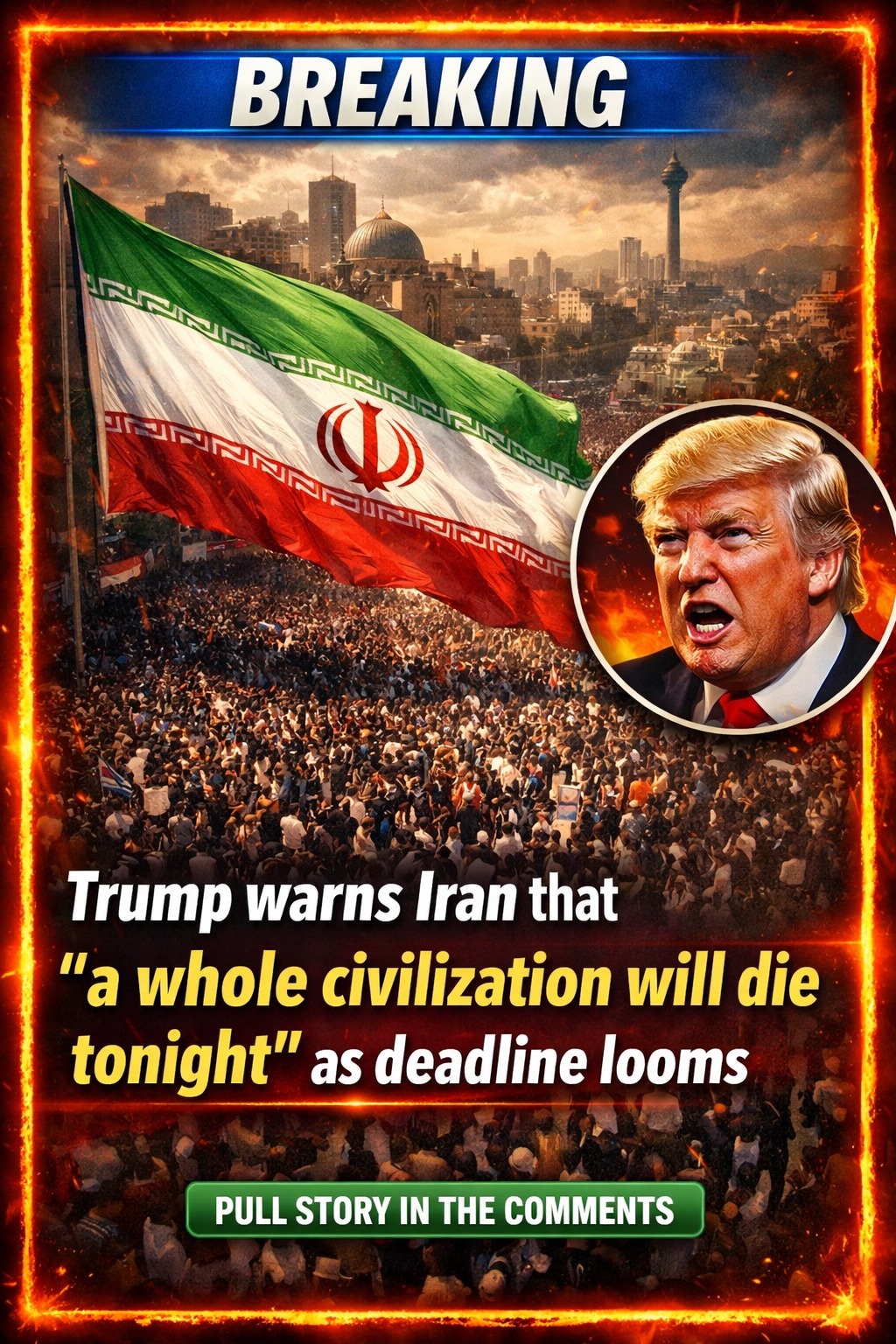
In Washington, Trump’s warning landed like a thunderclap: comply or face a wave of strikes designed to cripple Iran’s infrastructure and, in his words, erase a “whole civilization.”
The phrase echoed across news networks, social media platforms, and diplomatic cables within minutes. It was not the carefully measured language of traditional statecraft. It was raw, absolute, and terrifyingly final.
The Threat and Its Targets
His threat targets bridges and power plants, but its real aim is psychological forcing Iran’s leaders to weigh national pride against the specter of annihilation in front of a watching world. By naming specific infrastructure, Trump made clear that the consequences of defiance would not be abstract. They would be visible, immediate, and devastating. A bridge collapsing. A city plunged into darkness. A nation’s economy grinding to a halt.
The choice for Iran’s leadership was stark: back down publicly or risk destruction that would be broadcast live to every corner of the globe. For a regime that has built its legitimacy on resistance to foreign pressure, neither option was appealing. Backing down would signal weakness. Refusing would invite catastrophe.
Diplomats Scramble Behind the Scenes
Diplomats scrambled behind the scenes, pressing Tehran to reopen the Strait of Hormuz and avoid a confrontation that could ignite the global oil market and drag multiple countries into open conflict. The Strait is one of the world’s most critical maritime chokepoints, through which nearly a fifth of all petroleum passes. Any disruption would send oil prices spiking, threatening a global recession.
European allies watched with alarm. China and Russia, while reluctant to side openly with the United States, urged restraint on all sides. Behind closed doors, intermediaries shuttled between capitals, searching for an off-ramp that would allow both Washington and Tehran to claim victory without resorting to war. But the clock was ticking, and the gap between positions remained wide.
Life Inside Iran
Inside Iran, grief over recent funerals mixed with raw fury at foreign pressure, leaving ordinary people caught between a defiant regime and an unpredictable White House. The streets of Tehran and other major cities had already seen protests some directed at the government, others at the United States. The mood was volatile, shifting between fear and defiance, despair and determination.
For ordinary Iranians, the prospect of war was not abstract. They remembered the years of sanctions, the shortages of medicine and fuel, the inflation that made daily life a struggle. They remembered the families torn apart by violence, the young people who never came home. And now, they faced the possibility of something worse: a conflict that would not just squeeze their economy but destroy their cities.
Many blamed their own leaders for the crisis, accusing them of reckless provocation. Others blamed Washington, viewing the American president as a bully who respected no nation’s sovereignty. Most simply wanted to live to work, to raise their children, to dream of a future not defined by war.
The Global Stakes
As the deadline neared, the question wasn’t just what Trump would do, but whether anyone could pull both sides back from the edge before words turned irreversibly into war. The international community watched with bated breath. Oil markets fluctuated wildly. Military commanders on both sides reviewed their plans, preparing for outcomes they hoped would never come.
A full-scale conflict between the United States and Iran would not remain contained. It would draw in allies and proxies across the Middle East. It would threaten shipping lanes, energy supplies, and the fragile stability of a region already scarred by decades of war. It would cost thousands of lives perhaps tens of thousands and leave scars that would last for generations.
The Weight of Words
Trump’s warning was not delivered in a vacuum. It came after months of escalating tensions, of failed negotiations, of incidents that each side interpreted as provocations. The rhetoric had grown steadily more heated, the threats more explicit, the room for compromise smaller.
But words have weight. When a president of the United States speaks of erasing a “whole civilization,” he is not just communicating with his adversaries. He is speaking to history. He is shaping how future generations will understand this moment. He is raising the stakes in a way that makes peaceful resolution harder to achieve.
A World Holding Its Breath
In capitals around the world, leaders held emergency meetings. Intelligence agencies worked overtime, trying to divine intentions and anticipate moves. Journalists camped outside government buildings, waiting for any scrap of news. Ordinary people went about their lives, but with a gnawing anxiety, aware that events far beyond their control could change everything.
The deadline loomed. The world held its breath. And in the quiet before the storm, diplomats continued their desperate work, hoping that reason would prevail over rage, that somewhere in the shrinking space between ultimatum and attack, a path to peace still existed.
What Comes Next
No one could predict with certainty what would happen when the deadline arrived. The president’s words left little room for ambiguity. Iran’s leaders had shown little willingness to bend. The machinery of war, once set in motion, is difficult to stop.
But history is full of moments when catastrophe was averted at the last possible second. It is full of leaders who, at the brink, chose restraint over revenge. It is full of diplomats who, against all odds, found a way to say yes when everyone expected no.
Whether this would be one of those moments remained to be seen. What was certain, however, was that the coming hours would test not just military capabilities, but human wisdom. And in that test, the entire world had a stake.