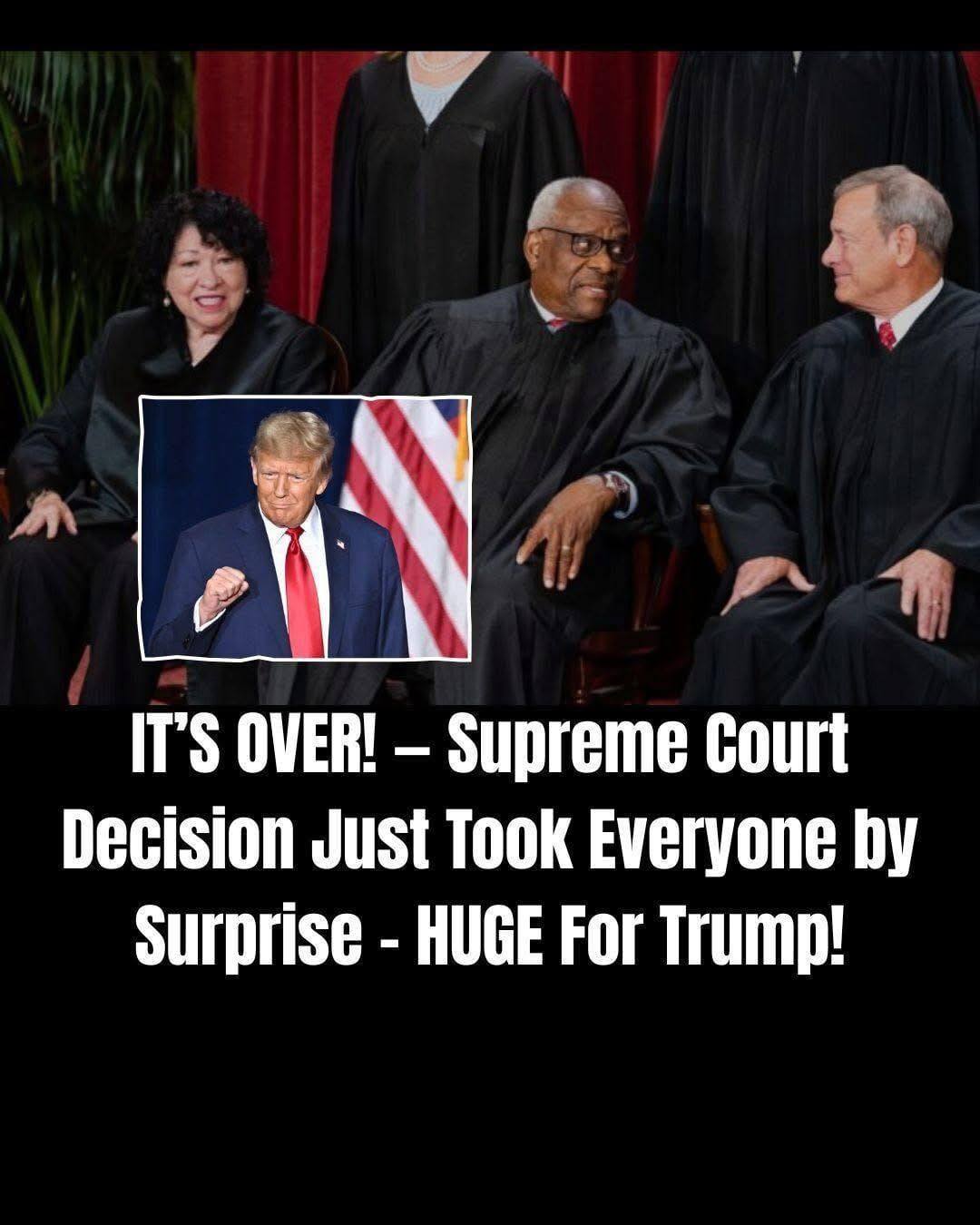
The ruling did more than settle a technical dispute over Temporary Protected Status; it redrew the line between compassion and control.
For years, legal scholars and immigration advocates had debated the scope of TPS whether it was a temporary humanitarian measure or something closer to a pathway for long-term residence. The Supreme Court’s 8-1 decision answered that question with striking clarity, and the answer sent shockwaves through immigrant communities across the nation.
By declaring TPS an instrument of foreign policy rather than a durable shield for vulnerable people, the Court handed the White House enormous power over the fate of migrants whose lives are already defined by upheaval. The ruling essentially said that while the United States can offer safe harbor to those fleeing war, natural disaster, or political instability, that harbor was never meant to become a permanent home. The distinction may seem subtle in legal briefs, but on the ground, it changes everything.
The Human Cost of a Legal Distinction
For Venezuelans who have spent years working, paying taxes, and raising American-born children, the message is devastatingly clear: their place here was always contingent, and that contingency has now been called in. Families who built lives who signed leases, enrolled children in schools, started small businesses, and joined churches now face the possibility of watching those lives unravel. Not because they did anything wrong. Not because they committed crimes or violated laws. But because the legal framework that allowed them to stay was never designed for the long term.
Imagine a mother who fled Caracas with nothing but a suitcase and her youngest child. She found work cleaning offices. She learned English at night. She watched her daughter graduate from high school with honors. Now, that same mother may be told to pack her bags again. Not because conditions in Venezuela have improved they haven’t but because the Supreme Court has ruled that temporary protection means exactly that: temporary.
A Broader Shift in Immigration Policy
The ruling arrives at a moment when immigration policy is already undergoing seismic shifts. The Department of Homeland Security, under the leadership of Kristi Noem, has signaled a harder edge. Enforcement priorities have changed. The rhetoric surrounding immigration has grown sharper, less forgiving. And now, the judicial branch has handed the executive branch a powerful new tool for shaping who gets to stay and who must go.
Supporters of the ruling celebrate it as a restoration of presidential authority and border discipline. They argue that for too long, temporary protections have been allowed to stretch into decades, effectively creating a shadow immigration system outside the control of Congress. They insist that mercy cannot quietly morph into permanence that compassion must have limits, and that those limits must be enforced.
The Other Side of the Argument
Opponents see something very different. They see a cold legalism that ignores the terror of a knock at the door, a plane back to chaos, a family split along a border. They argue that the United States has always defined itself as a refuge a place where those fleeing persecution and disaster could find safety. To strip that safety away, they say, is to betray the very ideals that built the nation.
For opponents, the ruling is not about legal nuance. It is about people. It is about children who have never known another home being told they do not belong. It is about workers who have contributed to the economy being told their labor is no longer needed. It is about families who have prayed, hoped, and struggled being told that none of it mattered.
The Political Fight Intensifies
As the implications of the ruling sink in, the political fight intensifies. Advocacy groups are mobilizing. Legal challenges are being prepared. Congressional Democrats have vowed to introduce legislation that would permanently protect TPS recipients, though passage remains uncertain in a divided government.
Meanwhile, the White House has signaled that it intends to use its newfound authority carefully but firmly. Administration officials argue that the ruling does not mandate deportations; it simply clarifies the limits of temporary protections. They emphasize that case-by-case reviews will be conducted, and that humanitarian exceptions will be considered.
But for those living under the shadow of the ruling, such assurances offer little comfort. They have seen promises broken before. They have watched friends and neighbors disappear, removed by agents who knocked without warning. Trust, once broken, is not easily restored.
A Nation Suspended
In that widening gap between law and lived reality, hundreds of thousands now wait, suspended between the country they fled and the country that may no longer want them. They wait for guidance from DHS. They wait for action from Congress. They wait for courts to clarify what happens next.
But waiting is not living. And for many, the uncertainty has already become unbearable. Parents lie awake at night, wondering whether their children will be allowed to finish the school year. Employees watch the news, wondering whether their bosses will be forced to let them go. Pastors and community leaders hold meetings, trying to offer hope in the face of despair.
What Comes Next
The Supreme Court’s 8-1 ruling is not the final word. Legal battles will continue. Policy debates will rage. And in the end, it may be Congress not the courts that determines the fate of TPS recipients. But for now, the message is clear: temporary protection is temporary. And for hundreds of thousands of people who thought they had found a home, that message lands like a sentence.
The coming months will determine whether the United States finds a way to balance compassion with control or whether it chooses control at the expense of compassion. Either way, the ruling has set the stage for a confrontation that will define not just immigration policy, but the nation’s understanding of itself.
A Final Reflection
In the end, the debate over TPS is not really about legal technicalities or foreign policy. It is about who we are as a country. Do we offer refuge to the vulnerable, or do we close our doors when staying open becomes inconvenient? Do we see immigrants as future citizens, or as temporary workers to be discarded when no longer needed?
The Supreme Court has spoken. But the conversation is far from over. And for the hundreds of thousands waiting in that painful gap between law and life, the only thing more frightening than the ruling itself is not knowing what comes next.