
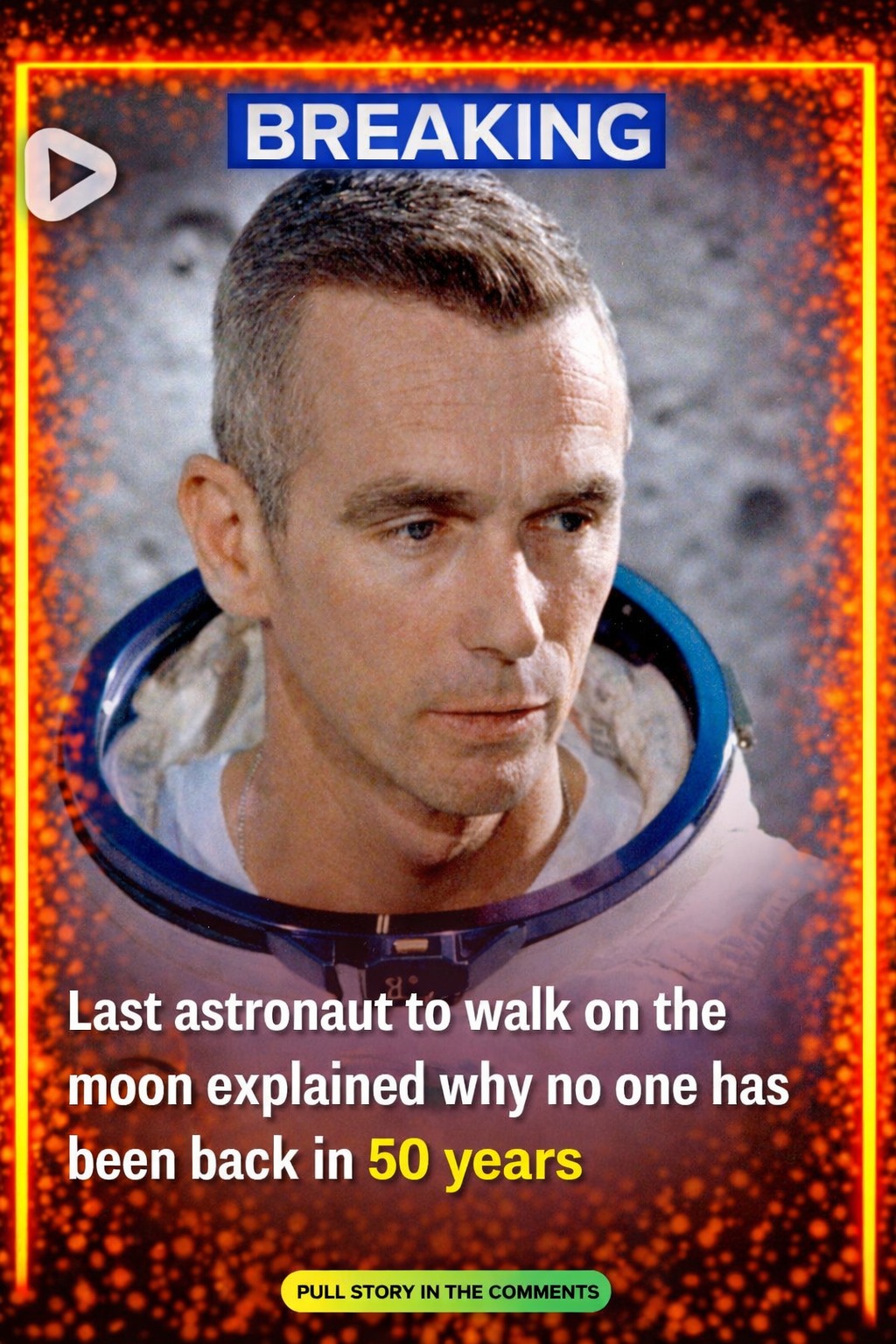
For Jim Bridenstine, the truth was never about missing technology, but missing courage. In the decades since the final Apollo mission left the lunar surface, countless articles, documentaries, and dinner table debates have asked the same question: why haven’t we gone back?
The answers have ranged from the practical to the conspiratorial. Some point to budget cuts. Others blame shifting scientific priorities. A few have even suggested, with varying degrees of seriousness, that something or someone wants us to stay away.
But Bridenstine, a former NASA administrator who has spent years studying the agency’s history and its future, cuts through the noise with a simpler, more uncomfortable explanation. We have the technology. We have the knowledge. What we lack is the nerve.
The Real Barrier: Political Risk
Political risk, not rocket science, stalled humanity at low Earth orbit. The engineering challenges of landing on the Moon were solved more than fifty years ago. Computers that had less processing power than a modern toaster guided astronauts across a quarter million miles of space and set them down gently on a surface no human had ever touched. Today, our technology is exponentially more advanced. Our materials are stronger. Our understanding of spaceflight is deeper.
And yet, no one has returned.
The reason is not found in laboratories or launch pads. It is found in committee rooms and election cycles, in budget hearings and press conferences, in the cold calculus of political survival. A failed Moon mission would be a disaster not just for NASA, but for the president who authorized it, the Congress that funded it, the administrators who oversaw it. The risk of failure, however small, looms larger than the promise of success.
Programs Dragged Down by Bureaucracy
Programs dragged on. Budgets ballooned. And the will to plant new flags on alien soil dissolved in endless reviews, shifting priorities, and the gravitational pull of more immediate concerns. The Apollo program succeeded because it had a deadline and an enemy. The Cold War provided urgency. The space race provided focus. When those forces faded, so did the momentum.
Proposals for lunar bases, Martian missions, and permanent human presence beyond Earth’s orbit have been drafted, debated, and shelved for decades. Each generation of leaders promises a bold new vision. Each generation passes the buck to the next. And the Moon remains untouched, a monument not to technological limits but to political paralysis.
What Could Have Been
We could have stood on Martian dust by now, Bridenstine argued, if not for fear of failure on the evening news. Imagine it: astronauts planting flags on the red planet, rovers scouting ahead, habitats being assembled for long-term stays. The scientific discoveries alone would be staggering. The technological spin-offs would transform industries. The inspiration for a new generation of explorers would be immeasurable.
Instead, we have spent fifty years looking back at the Moon from a distance, remembering what we once did, wondering why we stopped. The answer is uncomfortable: we chose to stop. Not because we couldn’t go, but because we were afraid of what might happen if we tried and failed.
Artemis II: Breaking the Paralysis
Artemis II is the first real attempt to break that paralysis. The mission is not just another launch. It is a declaration that the political courage Bridenstine spoke of may finally be returning. Four astronauts will circle the Moon, flying farther from Earth than any human has traveled since the 1970s. But they carry far more than instruments and scientific equipment.
A widowed commander brings a notebook filled with thoughts his daughters may one day read words of love, wisdom, and hope written in the quiet hours before launch. He lost his wife to cancer, and in her absence, he has poured his grief and his purpose into this mission. The Moon, for him, is not just a destination. It is a tribute.
A record-breaking pioneer clutches handwritten messages from home, letters from family and friends that she has promised herself she will not open until she reaches lunar orbit. Each envelope contains a piece of Earth, a reminder of what she is fighting for, a tether to the people who believe in her.
A Canadian rookie, flying on his nation’s behalf, carries moon-shaped pendants for his family small talismans that will circle the Moon and return to Earth, carrying with them the dreams of everyone who stayed behind. He is the first from his country to venture this far, and he feels the weight of that honor with every heartbeat.
And a trailblazing pilot flies as the first Black person bound for lunar orbit, breaking barriers that should have fallen decades ago. She carries the hopes of generations who looked up at the Moon and wondered if they would ever be invited to visit. Her presence on this mission is not symbolic; it is overdue.
The Quiet Courage of Four Individuals
If politics once kept us grounded, their quiet, personal courage may be what finally pulls humanity back into the dark, waiting dust of the Moon. These four astronauts are not politicians. They are not bureaucrats. They are human beings who have trained for years, sacrificed comfort and safety, and chosen to risk everything for the chance to see Earth from a distance that few will ever experience.
Their courage is not loud. It is not theatrical. It is the courage of showing up, of strapping into a rocket that could explode, of trusting the engineers, the systems, and each other. It is the courage of leaving behind everyone you love and flying into the unknown, knowing you may not return.
A New Chapter in Exploration
Artemis II is not the end of the story. It is the beginning. If it succeeds, it will open the door for Artemis III, which will land on the lunar surface. It will pave the way for habitats, rovers, and eventually, a sustained human presence on the Moon. It will prove that the paralysis Bridenstine described can be broken, that political courage can be found, that the risk of failure is worth taking.
The astronauts of Artemis II understand this. They know that they are carrying more than their own hopes. They are carrying the dreams of everyone who has ever looked up at the Moon and wondered. They are carrying the legacy of Apollo, the promise of the future, and the stubborn belief that humanity belongs among the stars.
A Final Reflection
For fifty years, we have asked why no one has gone back to the Moon. The answer, as Bridenstine explained, was never about technology. It was about courage political courage, institutional courage, the collective will to risk failure for the sake of greatness.
Now, with Artemis II, that courage is being tested again. Four astronauts are preparing to fly farther than anyone has flown in decades. They are not superheroes. They are not myths. They are people with families, fears, and handwritten letters in their pockets who have decided that the risk is worth taking.
If they succeed, they will not just circle the Moon. They will remind us of what we are capable of when we choose courage over caution, exploration over comfort, and the future over fear. And perhaps, after fifty years of waiting, that is exactly what we need.