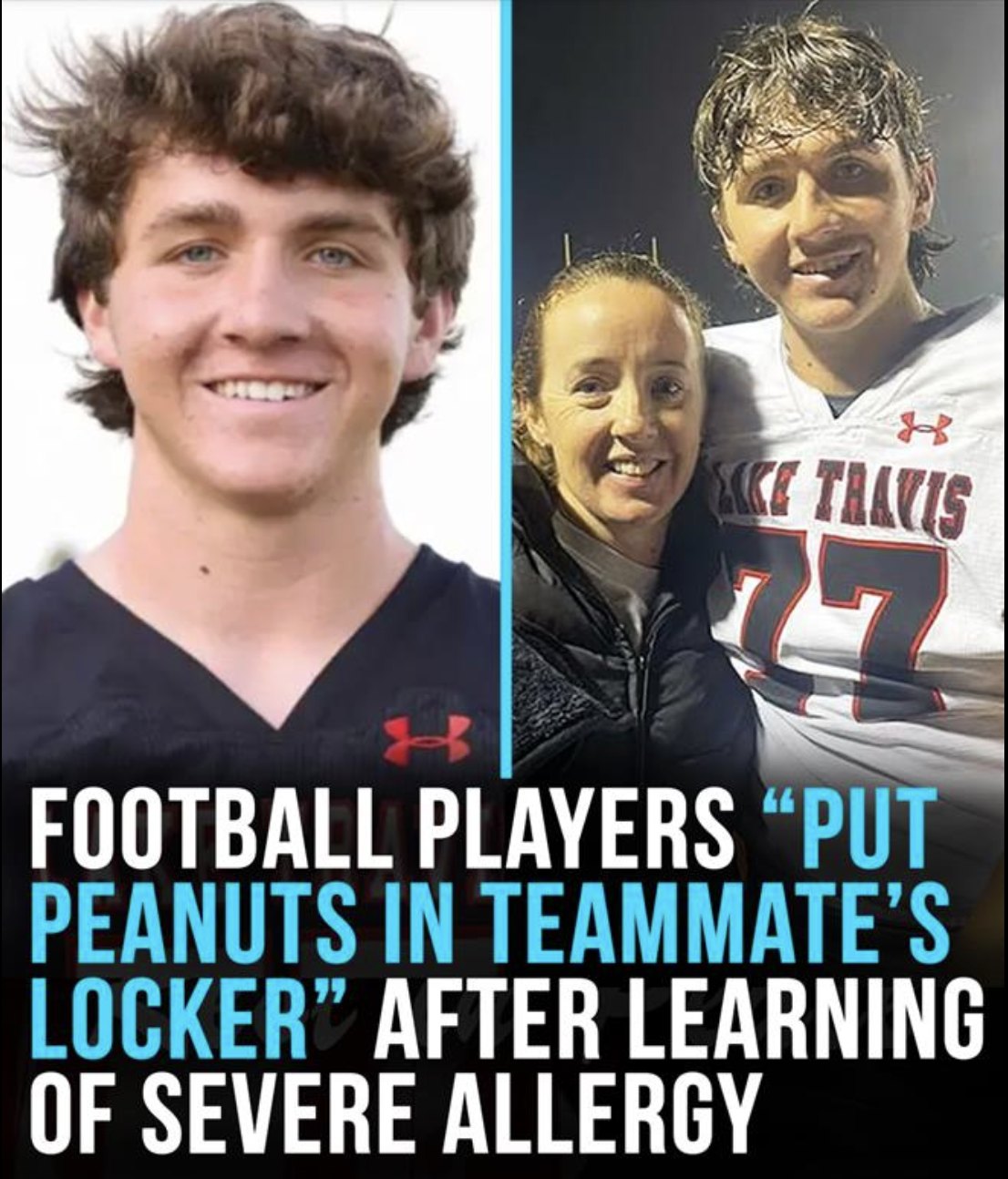
Carter Mannon had spent his entire life navigating a danger most people barely think about. Diagnosed in infancy, he grew into a dedicated varsity football player who understood that even the slightest exposure could trigger a life-threatening allergic reaction.
His teammates were aware of his condition. They had even asked him directly whether peanuts could kill him—and he answered honestly: yes. The following day, peanuts were reportedly spread throughout his locker, on his uniform, and even inside his cleats, causing him to break out in hives almost immediately.
The students involved were temporarily benched and assigned additional drills. Later, the school district determined that the incident did not meet its official criteria for bullying. Meanwhile, Carter allegedly faced further issues, including another peanut-related item being placed in his belongings. Feeling unsafe and unsupported, he ultimately transferred to a different school.
His mother is left grappling with a difficult question—one that resonates with many families: when a so-called “prank” puts a child’s life at serious risk, where should the line be drawn?